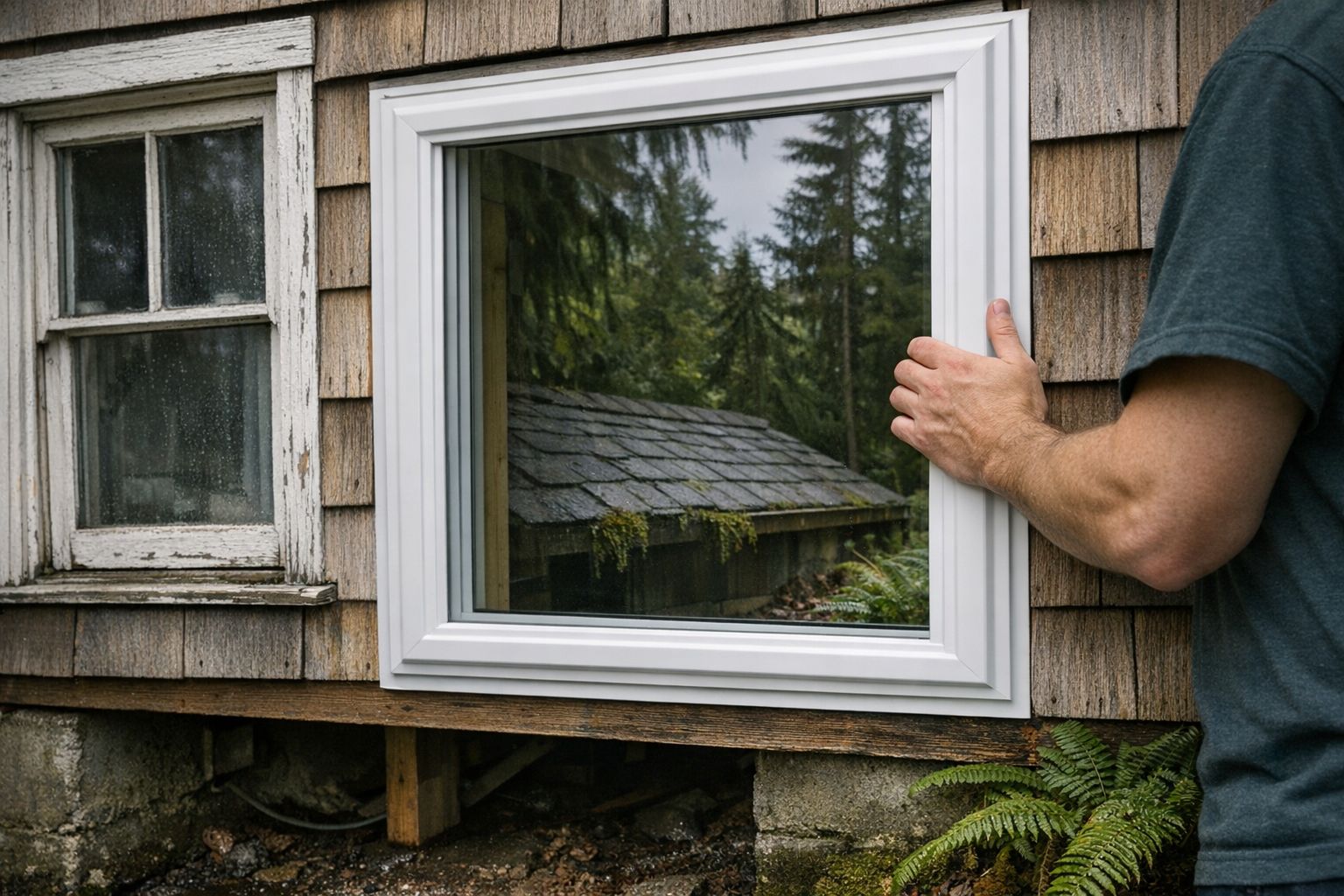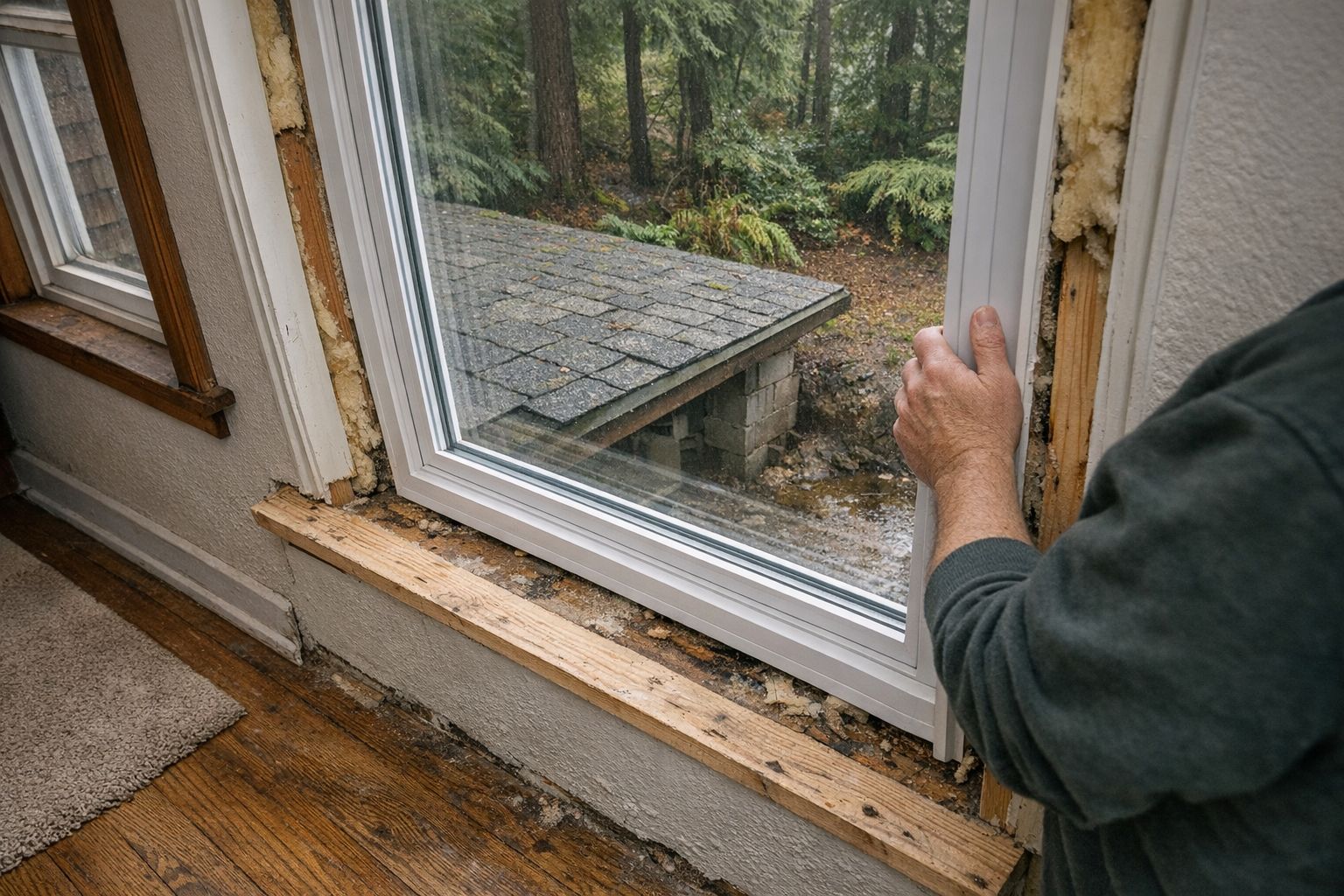
Renton doesn't deal with brutal winters or scorching summers, but it does deal with something windows have to work hard against year-round: sustained moisture. Here's what energy efficiency actually means in a mild, wet Pacific Northwest climate.
Why Heat Loss Looks Different in a Mild, Wet Climate
Steady, Low-Grade Loss Across a Long Damp Season
In climates with extreme winters, energy-efficient windows are mostly about stopping heat loss during a few brutal months. In Renton, the concern is more about steady, low-grade heat loss across a long, mild, wet season. A window that performs adequately in a short cold snap can still cost you more than expected over months of consistently damp, 45-degree weather, simply because the loss adds up over so many days rather than a few extreme ones. That difference matters when you are choosing between glass packages, because the specification that looks like overkill for a single cold week can quietly pay for itself across a Pacific Northwest heating season that runs from October well into spring.
Moisture Is Part of the Efficiency Equation
Rain, humidity, and long stretches of overcast, damp weather put a different kind of strain on windows than a drier climate would, and that changes what energy efficient actually means here. Beyond heat transfer through the glass, the job of a window in Renton is keeping moisture from finding its way into gaps around an aging frame. Homes around Kennydale, Talbot Hill, and Benson Hill with original 1970s aluminum frames often show both problems at once: measurable heat loss through the frame itself, and damp working its way into the surrounding sill. Treating efficiency and moisture control as one question rather than two produces a much better result.
Glass Packages Worth Considering
Double-Pane with a Low-E Coating
Double-pane windows with a low-emissivity, or low-E, coating are the baseline for most Renton homes. The coating is a microscopically thin layer applied to the glass that reflects heat back toward its source, keeping warmth inside during the cool, damp months without making the room feel dim. For the majority of homes, a quality double-pane low-E unit cuts heat transfer substantially without blowing up the replacement budget, which is why it is the starting point we quote most often rather than an upgrade.
Triple-Pane and Thicker Insulated Glass Units
For homes with specific noise or comfort concerns, a thicker insulated glass unit or a triple-pane option can be worth the added cost. Houses near busier corridors, closer to the Renton Landing area, or under regular flight paths often benefit as much from the sound-dampening effect as from the thermal gain. Triple-pane units are heavier and cost more per opening, so they tend to make the most sense targeted at the rooms where you actually notice the problem rather than applied across an entire house by default.
Argon-Filled and Gas-Filled Units
Gas-filled units, typically using argon between the panes, add another layer of insulating performance. Argon is denser than air, so it slows heat transfer across the cavity between panes, and it pairs naturally with a low-E coating for a meaningful gain at modest added cost. If efficiency is your top priority, this is worth asking about specifically during your estimate, since it is the kind of detail that varies between product lines and is easy to overlook when you are comparing quotes on price alone.
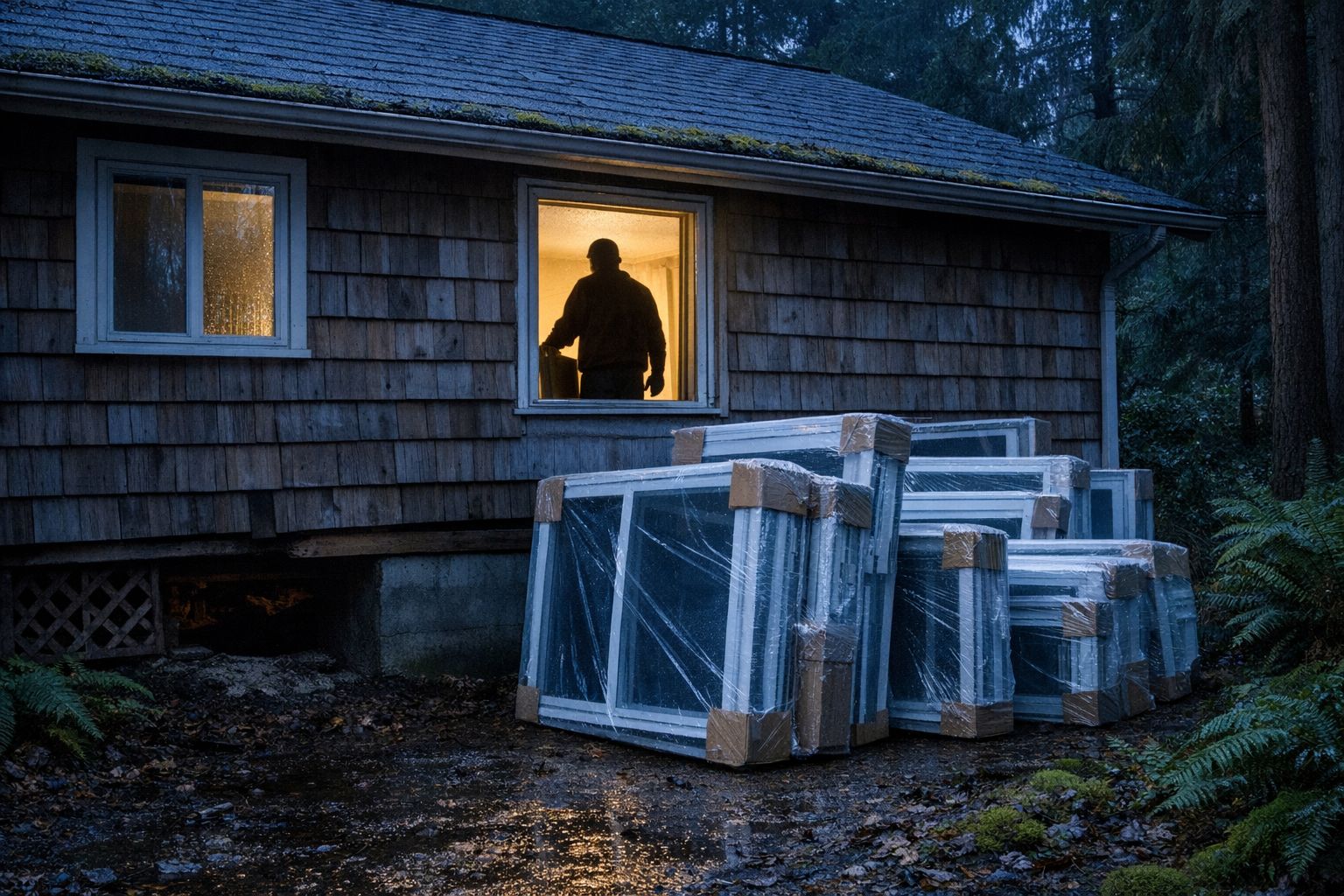
Installed replacement window — Renton, WA
Frame Material Matters as Much as Glass
Why Vinyl Handles Sustained Moisture Well
Vinyl frames handle sustained moisture exposure well and don't require repainting or sealing the way older wood frames do. In a climate where a north-facing wall can stay damp for weeks and moss finds a foothold on roofs and shaded siding, a frame material that simply doesn't absorb water removes an entire category of maintenance. Modern vinyl frames are also built with internal chambers that trap air, which improves the thermal performance of the frame itself rather than relying on the glass to do all of the work.
Aluminum Frames and Cold Spots
Aluminum frames, while durable, conduct heat and cold more readily than vinyl, which can create cold spots along the frame even with efficient glass installed. This is the single most common thing we see in Renton homes built in the 1960s and 1970s: the glass has been upgraded at some point, but the original aluminum frame is still there, still conducting, and still collecting condensation along the bottom rail on cool damp mornings. If you can feel a temperature difference when you touch the metal frame in winter, that frame is part of your heating bill.
Fiberglass and Composite Options
Fiberglass and composite frames sit somewhere in between, offering strong moisture resistance with slightly different price and appearance trade-offs than standard vinyl. They hold paint well and can be a good fit when you want a narrower sightline or a specific color to match a home's existing character, which matters on older Renton houses where a bulky frame profile would look out of place. The trade-off is cost, so it is worth comparing a fiberglass quote directly against a quality vinyl quote before deciding.
Sealing Details Often Get Overlooked
Flashing and Weatherstripping Do Real Work
A window with excellent glass can still underperform if the flashing and weatherstripping around the frame aren't installed correctly. Flashing directs water that runs down the wall away from the opening rather than into it, and weatherstripping closes the gap between the sash and the frame when the window is latched. Neither shows up on a product spec sheet, and neither is visible once the trim is back on, which is exactly why they are the details most likely to be rushed and the ones most worth asking about.
A Marginal Seal Costs More Than Energy
In a climate with as much sustained rain as this one, a marginal seal doesn't just waste energy. It can let moisture into the wall cavity long before it shows up as a visible problem indoors, and by the time a stain appears on interior drywall the framing behind it has usually been damp for a while. This is one of the main reasons window efficiency has as much to do with installation quality as it does with the product itself. Even a top-tier window performs poorly if it is not sealed correctly against the surrounding wall, which is why our crews treat flashing detail as part of the install rather than an afterthought.
How Orientation Affects Window Performance
South- and West-Facing Windows
Windows facing west and south tend to pick up more direct sun during the drier months, which can help offset heating costs somewhat. In Renton that solar gain is a genuine benefit for most of the year given how much of the winter arrives as flat, cool grey light rather than direct sun. During a warm stretch in July and August, though, a large unshaded south or west window can push a room uncomfortably warm, so a coating tuned to control solar heat gain sometimes makes sense on those specific walls.
North and East Exposures
North-facing windows lose more heat than they gain over the course of a year, and east-facing windows sit somewhere in between, taking morning sun and then going shaded. North walls also stay damp longest, especially where conifers shade the house, which makes moisture-rated frames and a well-detailed seal particularly important on that side. None of this means you should avoid windows on a particular side of the house. It just means glass selection can be tuned by orientation, with a slightly different coating sometimes making sense on a sunny south wall than on a shaded north wall.
Balancing Efficiency and Budget
Prioritize Your Highest-Impact Windows
The most efficient glass and frame combination isn't always the right call for every window in the house. A rarely used window in a low-traffic room may not need the same glass package as a large living room window that dominates your view and your heating bill. We generally recommend prioritizing your highest-impact windows, meaning the largest, most exposed, or most frequently used, for the more premium glass options. Spending the upgrade budget on four windows that actually matter usually beats spreading it thinly across fourteen.
Standard Efficient Packages Cover the Rest
For the remaining openings, a standard efficient package covers the house well. A double-pane low-E unit in a properly sealed frame is a large improvement over single-pane glass or a 1970s aluminum frame, and the difference between that and a premium package on a small bathroom window is not something you will ever notice. Phasing the work is also a reasonable option, and if that is the plan we will tell you which openings to do first so the money goes where the loss is worst.
Spotting Windows That Are Losing Efficiency
What to Look and Feel For
A handful of signs reliably point to windows that have stopped performing. Condensation forming between the panes indicates the seal has failed. Noticeable drafts with the window fully latched suggest the frame is no longer sealing. Cold spots near the window frame in winter usually mean the frame itself is conducting. Higher energy bills without another clear explanation are a common indirect signal. Interior condensation on the glass on cold, damp mornings is worth noting too, since single-pane and aging double-pane glass runs cold enough for indoor humidity to collect on it.
A Simple Walk-Through You Can Do Yourself
Before scheduling an estimate, it's worth doing a quick walk-through of your own home. Hold a hand near the edge of each window on a breezy day to feel for drafts, look closely at the glass for any haze or fog between panes, and check whether frames still open and lock smoothly. Noting which specific windows show these issues, rather than assuming the whole house needs replacement, helps make your estimate more efficient and gives you a clearer starting point for the conversation.
Getting an Efficiency-Focused Estimate
If energy efficiency is your main priority, mention that up front during your estimate. It will shape which glass and frame combinations we recommend for your specific home and orientation, and it changes which trade-offs we walk you through. We will also point out which of your current windows are likely contributing the most to heat loss, so you can prioritize accordingly if you are not replacing every window at once. Request a free estimate whenever you are ready to talk through the options for your home.
Ready to Replace Your Windows?
Get a free in-home estimate for your Renton home. Same-week availability.
📞 Call (253) 387-8076