
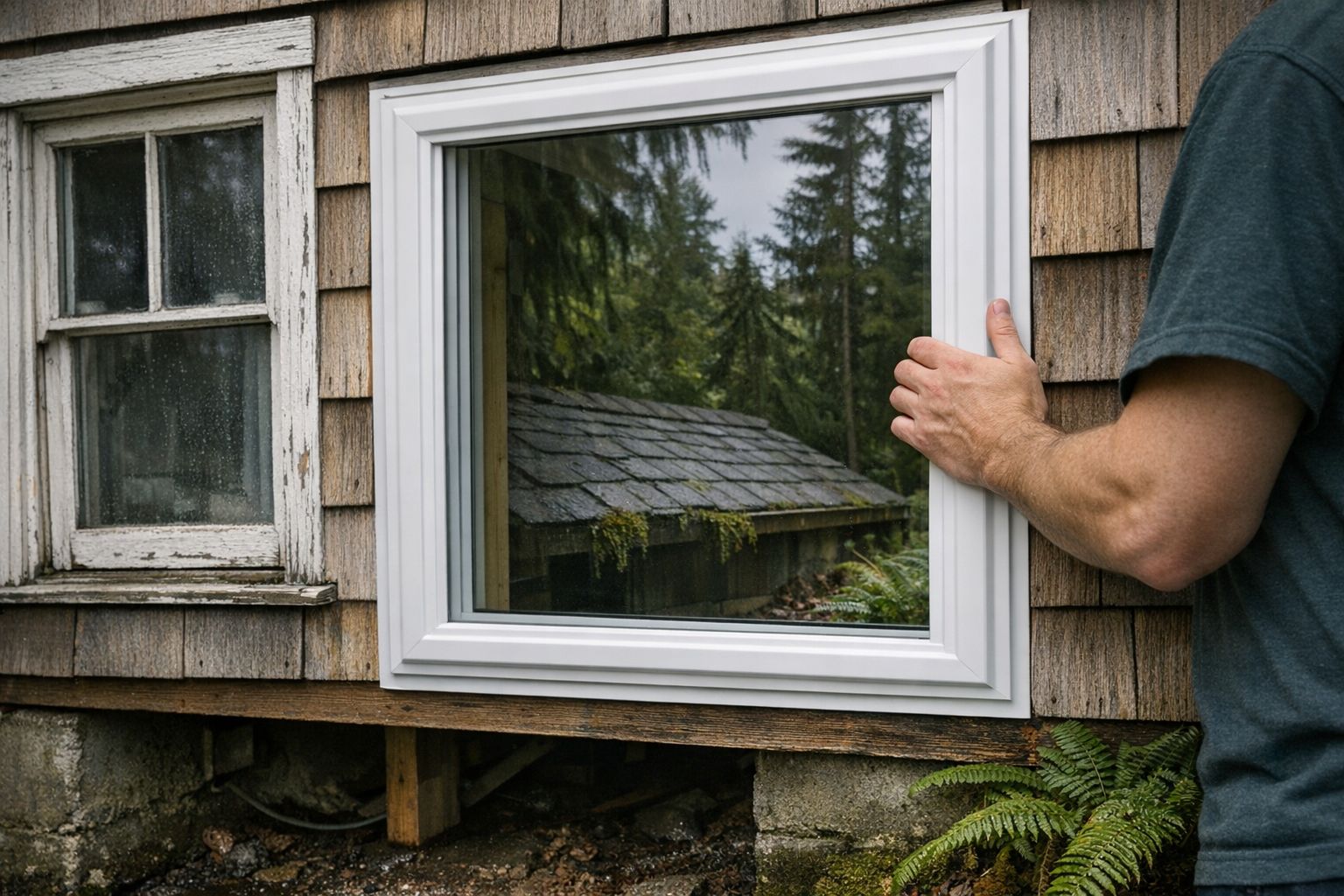
Casement Windows in Renton, WA
Casement windows crank open outward on a hinge and seal by compressing against the frame, which makes them one of the tightest-sealing window styles available. That is a real advantage in a climate with frequent wind-driven rain like Renton's, where storms through the wetter months often arrive with sustained wind behind them. For homeowners weighing window styles across an entire house, casement units tend to earn their place on the walls that take the most weather, while other styles handle the openings where an outward swing would get in the way.
Why Casement Windows Fit This Climate
A Compression Seal Against Wind-Driven Rain
Unlike sliding or double-hung windows, which rely on friction between two sashes to stay weathertight, a casement window seals by pressing its sash directly against the frame when closed. That compression seal resists wind-driven rain far more effectively, which matters during Renton's wetter months when storms often come with real wind behind them. It is one of the reasons casement windows show up so often on the more exposed sides of homes throughout our service area, particularly on west and south elevations that catch weather coming up the valley.
Ventilation Without Sacrificing the Seal
Because a casement window opens outward like a door, it can catch and direct passing breezes into the room, offering better natural ventilation than a sliding window of the same size while still sealing tightly when closed. On a warm summer evening, an open casement window can actually funnel more airflow into a room than a same-sized sliding window opened the same amount, since the entire opening becomes usable rather than just half of it. That combination of summer airflow and winter tightness is what makes the style versatile here.
Where Casement Windows Work Best
Casement windows suit hard-to-reach spots such as above a kitchen sink, where a crank handle is easier to operate than a sash you would need to reach across a counter to move. They also fit rooms where you want maximum ventilation from a single opening, and any exterior wall exposed to prevailing wind and rain. Homeowners who care about a clean, unbroken sightline often prefer them too, since casement sashes present a narrower visible frame than some sliding designs of comparable size.
Signs a Casement Window Might Be Right for Your Project
Openings That Take Direct Weather
If you are replacing a window on a wall that regularly takes wind-driven rain, a casement window is worth strong consideration. The same is true if your current window leaks during storms or whistles when the wind picks up, both of which usually point to a seal that friction alone is no longer holding. Exposed elevations on homes around Kennydale and the Highlands frequently fall into this category, and switching those specific openings to casement units often resolves complaints that persisted through earlier repairs.
Hard-to-Reach Windows Above Sinks and Counters
Reach is the other common reason homeowners choose casement windows. Operating a crank is simply easier than leaning across a sink, a stovetop, or a deep counter to slide a sash open and closed, and the difference becomes more noticeable the more often the window gets used. If you have an opening you avoid opening because it is awkward to reach, a casement unit will likely change how you use that room. We look for openings like these during the estimate and point them out.
Common Rooms for Casement Windows
Kitchens, bathrooms, and bedrooms on exposed walls are the rooms where we install casement windows most often, since ventilation and weather resistance both tend to matter more in those spaces. Living rooms with a strong view orientation sometimes use casement windows as well, particularly where a clean sightline with minimal visible frame is a priority. Many casement units can also meet bedroom egress requirements depending on their size, and we confirm what your specific room needs while we are measuring.
Comparing Casement to Other Window Styles
Casement Versus Sliding Windows
Compared to sliding windows, casement windows generally seal more tightly against wind-driven rain thanks to their compression-style closure, which pulls the sash against the frame rather than relying on contact between two moving sashes. Sliding windows still perform well in this climate with good weatherstripping and are usually more affordable, so the practical answer for most homes is a mix. Many homeowners in our service area choose casement units for their most weather-exposed walls and sliding windows elsewhere, matching the style to each opening's exposure.
Casement Versus Fixed and Single-Hung Windows
Compared to standard fixed or single-hung windows, casement units offer noticeably more usable ventilation for a given opening size, because the entire sash swings open rather than only half the opening being operable. A fixed window offers no ventilation at all, which is fine for a view-oriented opening but limiting in a kitchen or bathroom. A single-hung window gives you half the opening. For rooms where airflow is a real functional need rather than an occasional nicety, that difference adds up quickly.
Clearance Considerations Before You Choose
The main trade-off is that casement windows require exterior clearance to swing open, which is not always practical near a walkway, a deck, a driveway, or a tight side yard. Landscaping matters too, since shrubs and conifers planted close to the house can block a sash from opening fully within a few seasons of growth. We check clearance at every candidate opening during your estimate, and where the swing arc is a problem we say so and recommend a different style for that particular window.
Hardware, Maintenance, and Cost
Hardware and Hinge Options
Casement window hardware has come a long way from older, simpler crank mechanisms. Many current options include multi-point locking systems that pull the sash tight against the frame at several points rather than just one, improving both security and seal performance across the full height of the window. Hinge placement can also be adjusted so a window swings the direction that makes sense for how furniture or walkways sit just outside it. We walk through the hardware options relevant to your specific openings during the estimate.
Maintenance Considerations
Casement windows have working hardware, namely a crank mechanism and hinges, that benefits from occasional lubrication to keep operation smooth. Screens sit on the interior side rather than the exterior, which many homeowners find easier to clean but which takes a little adjustment if you are used to a different style. Checking the weatherstripping once a year and keeping the track at the base of the frame free of debris, including the fine needle litter conifers drop through the fall, helps the seal perform as designed.
Cost Considerations
Casement windows typically run somewhat higher than basic sliding windows because of the hardware involved in the crank and hinge assembly. The exact cost for your project depends on size, the glass package you choose, whether you want a grid pattern, and how many units you are replacing in a single visit. Larger orders spread setup and measuring time across more openings, which affects the per-window figure. We go through all of the specifics during your free in-home estimate rather than quoting from a catalog.
Serving Renton and the Surrounding Area
Casement Installations Across South King County
We install casement windows throughout Renton, Kent, Tukwila, SeaTac, Newcastle, Maple Valley, Covington, and Auburn. Because our crews work the same corridor consistently, they know which elevations in these neighborhoods take the brunt of winter weather and how older aluminum-framed openings tend to be built behind the trim. That context helps when a casement retrofit calls for adjusting the opening, detailing the flashing, or planning where the crank hardware will land relative to a counter or sill.
Matching Style to Exposure, Wall by Wall
The most durable approach we see in this region is choosing window style by exposure rather than picking one style for an entire house. Sheltered elevations under deep eaves can often take a simpler, less expensive unit, while walls that face driving rain benefit from the compression seal a casement window provides. During your estimate we walk the exterior with you, note which walls see the most weather, and recommend a mix that puts the tighter-sealing units where they will actually earn the difference in cost.
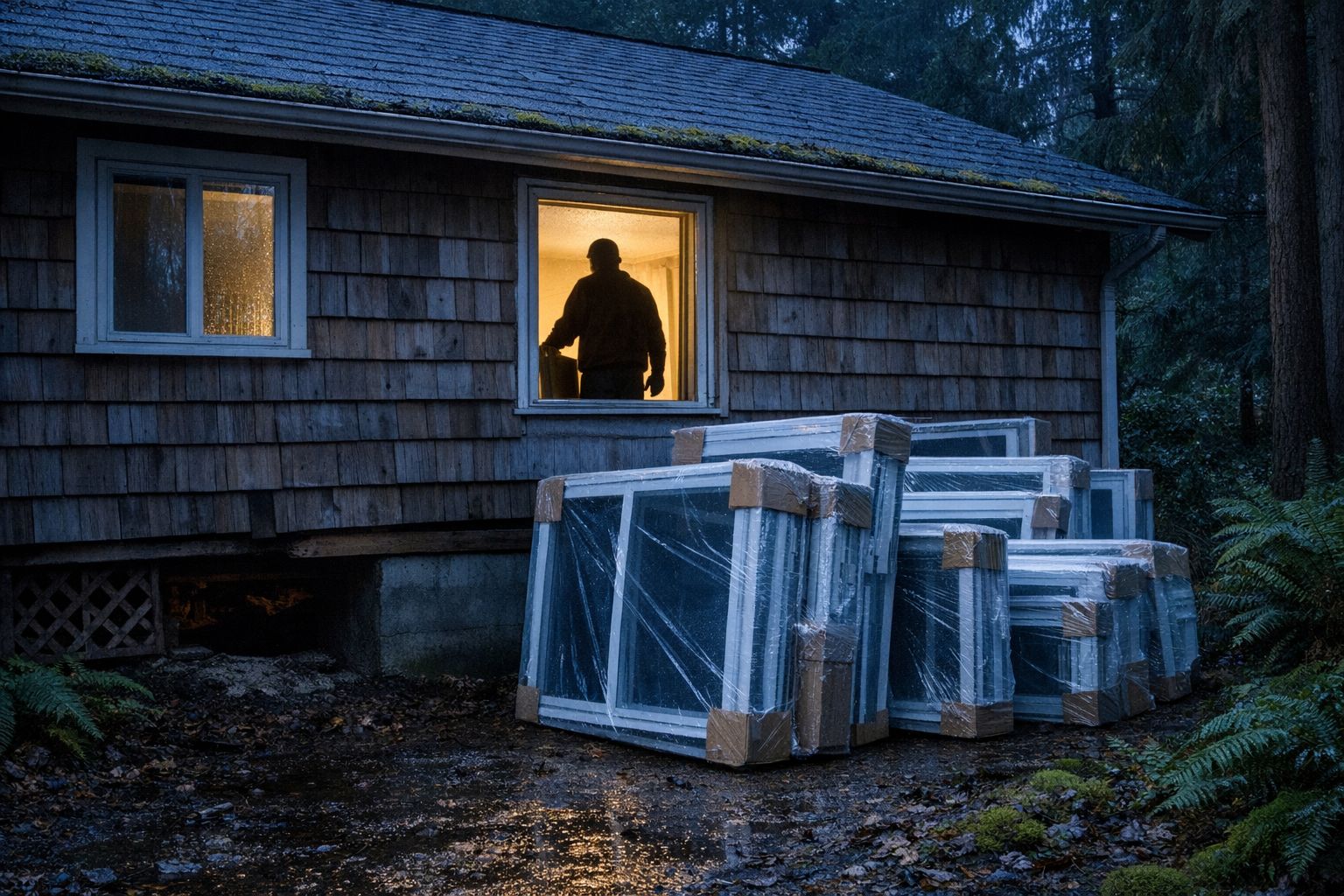
Window installation in progress — Renton, WA
Thinking about casement windows for part or all of your home? Call (253) 387-8076 or request a free in-home estimate. We'll check clearance at each opening, note which walls take the most weather, and recommend where casement units make sense and where another style fits better.
Free in-home estimates · Same-week installation available
📞 Call (253) 387-8076Get a Free Estimate
No obligation · Same-week availability
Takes 60 seconds · No obligation
Related Articles
Why Choose Us?
- Free In-Home Estimates
- Locally Operated
- Full-Frame & Insert Installation
- Same-Week Installation Available
- Moisture-Rated Flashing & Sealing
- Clear Written Estimates